
A Novice→Expert Model of Learning
Every artist was first an amateur.One of the best understood principles of cognitive psychology is that novices learn and think differently to experts. These labels are domain-specific, not person-specific; I can be an expert at particle physics whilst still being a novice at evolutionary biology. Or skateboarding. Similarly, you could be an expert skateboarder whilst knowing little of nothing about theatre design or ancient Tibetan languages. What this means is that we're all novices at something, and many of us will be experts in at least one domain.
Ralph Waldo Emerson
To demonstrate how you think differently as an expert to how you think as a novice, let's try a brief thought experiment. Pick something you consider yourself to be something of an authority on. Expertise is relative, so don't be shy. If you're a teacher you'll be fairly expert at many of the things you teach. For instance, I know a heck of a lot about Macbeth. I've seen four different theatre productions and at least five different film adaptations. On top of that, I must have taught it to perhaps 20 different classes, several times as an A level text (although I've never actually studied it as a student.) I've also read several books of literary criticism. As a consequence, I'm steeped in the bloody thing! Not only do I know the characters and plot inside out, I can quote sizeable chunks of it. I know a fair bit about the context in which it was first written and performed and also about how its critical reception has varied over the centuries. Whilst I'd never have the hubris to describe myself as an expert - there's always someone who knows a lot more - I'm not too shabby. In comparison, despite my grounding in literature as an academic study, I know practically nothing about French dramatist, Nicolas de Montreux's 1601 tragedy, Sophonisbe beyond the fact that it's about a Carthaginian woman who lived during the Second Punic War with Rome.
Now, imagine I had to write an essay about each of these plays. If you gave me any essay question on Macbeth I'd feel pretty confident that I'd have something interesting - although perhaps not original - to say. But faced with writing about Sophonisbe, even if I had a translated copy in front of me, would be tough. Why might this be? Although I'm pretty good at essay writing and know how a literature essay is supposed to sound, I'd struggle to write much worth reading about Sophonisbe because I don't know anything about it. I'd have to rely on guesswork, half-formed thoughts and trite stabs at close analysis. No doubt I'd do better than many other people who've never studied or taught literature, but I'm pretty sure that any literature undergraduate who'd actually read and seen the play would be able to outclass me. Basically, in literature - as in every other domain - specific knowledge trumps general ability. Now think about how poorly I'd be likely to do if I was assessed on organic chemistry, or tightrope walking.
Our ability to pay attention is limited to about four 'chunks'. These chunks can be very small - like the tiny smattering of Japanese vocabulary I possess - or pretty big like my knowledge of Macbeth. Experts 'hack' the limits of working memory by being able to draw on huge reserves of inter-related chunks of knowledge, allowing them to free up cognitive resources to enable them to think about the novel aspects of whatever they're thinking about. Think of it this way: a novice struggles to see the wood for the trees. If trying to navigate through a forest they'd head in and hope for the best but would quickly become confused and lost. An expert would take time to survey possible routes through the forest; they'd think about other occasions on which they'd undertaken similar journeys. They'd plan their path and, if they did get sidetracked, would have a range of strategies both for noticing the detour and for getting back on track. The novice's experience of walking through the forest would be completely different to the expert's.
So, how can we move from novice to expert? Broadly, I think there are two main hallmarks of expertise:
- Automaticity of foundational procedures
- Ability to see 'deep' structure within domains of expertise
The second area - the ability to see 'deep' structures - comes with the experience of thinking about domain-specific knowledge. The more we know and the more practice we have at identifying and solving problems within in a domain, the more likely we are to see through the superficial trappings of a problem to the underlying structures beneath. When we become aware of these structures we become increasingly able to transfer our ideas between contexts. The more I know about the domain of literature, the easier I find it to see connections between different texts. 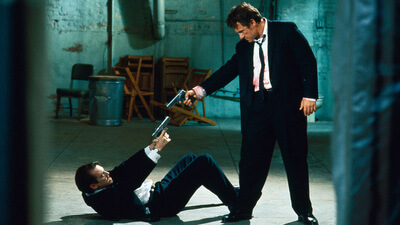 For instance, when I first watched Reservoir Dogs, with all its all long monologues and blood-thirsty revenge, and especially the set-piece stand-off in the final scene where everyone shoots everyone else, my immediate thought was, Oh, it's a Senecan tragedy! How was I able to see past all the silly names and ear slicing to see this underlying structure? Well, I took Classical Studies at A level and had read a couple of the Roman dramatist, Seneca's plays, then, as part of my English literature degree I'd been shown Seneca's influence on Hamlet, as well as writing an essay comparing Thomas Kyd's The Spanish Tragedy and Titus Andronicus. You could say I understood some essential dramatic principle but that would add an unnecessary layer of obfuscation - I simply knew more than lots of other people who saw the film and arrived at very different conclusions.
| Novices | Experts |
| Little relevant background knowledge | Lots of relevant background knowledge |
| Relies on working memory | Relies on long-memory |
| Lacks effective mental representations of successful performance | Has a clear mental representation of successful performance within a domain |
| Has not automatised necessary procedural knowledge | Necessary procedural knowledge has been automatised. |
| Only has explicit knowledge | Possesses huge reserves of tacit knowledge |
| Problem solving requires following clear steps | Problem solving is intuitive |
| Sees superficial details | Sees underlying structures |
| Learns little when exposed to new information | Learns a lot when exposed to information about which they are already knowledgeable |
| Learns best through explicit instruction and worked examples | Learns best through discovery approaches |
| Is more likely to experience cognitive overload as attention is swamped by new information | Is unlikely to experience cognitive overload as attention is buttressed by memorised ‘chunks’ of knowledge |
| Struggles to transfer principles to new contents | Is able to transfer principles between related domains |
This graphic (adapted from something Greg Ashman came up with back in his Harry Webb incarnation) is a neat shorthand of some of the points above:
 As a way forward, we might do well to implement the strategies Hattie & Donoghue suggest for surface acquisition with novices, and then, as students become increasingly expert, we might think about cautiously moving to the 'deep' strategies. I suggest that the 'transfer' strategies be reserved for the very end of an extended teaching sequence.
And for those of you who like your models to be a little more complex, the Dreyfus model of skill acquisition may be more to your taste. The Dreyfus brothers proposed that expertise develops in five stages: novice, advanced beginner, competent, proficient, and expert. I'm not sure we need all these categories, but if you like them then I can't see as they do any harm.
The Learning Spy Substack is a sharp, provocative dispatch from the front lines of education, where ideas are tested, myths are challenged, and nothing is taken for granted.
Join me on Substack